
Lion · Leopard · Elephant · Buffalo · Rhino
Big Five
The five animals that were hardest to hunt on foot, and are now the five most people come to see. Where each one is found, and what it takes to see all five.
- All five live in Tanzania
- Rhino: the Ngorongoro Crater
- Leopard: Serengeti river country
The famous five
What the Big Five Actually Means
The term has nothing to do with size. It was coined by big-game hunters in the nineteenth century to describe the five African animals considered most dangerous to hunt on foot — lion, leopard, elephant, buffalo and rhinoceros. The hippo, which kills more people annually than any of them, never made the list because it was not considered sporting.
The phrase survived into the safari era and became a checklist, which is both its appeal and its problem. Guests who spend a week hunting for five specific animals can drive past a cheetah hunt, a hyena den or three hundred elephants crossing a river because none of it counts. Our guides will find you the five. They will also, if you let them, slow down for the things that turn out to be more memorable.
On a well-planned week-long northern-circuit safari, four of the five are close to certain. Rhino is the difficult one, and any operator who guarantees it is not being straight with you.
One by one
Where to Find Each of the Big Five
Lion
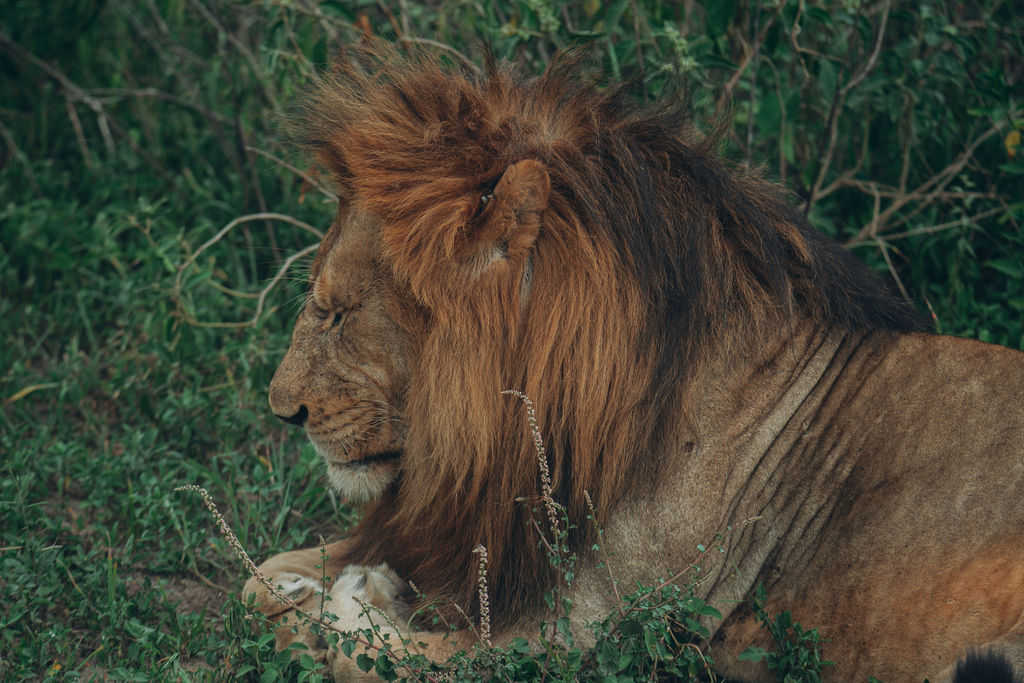
The easiest of the five. The Serengeti holds one of the largest lion populations on earth and the Ngorongoro Crater has the densest. Prides are habituated to vehicles and often visible in daylight, draped on kopjes or under acacias. Expect multiple sightings on any week-long safari.
Elephant
Also close to certain. Tarangire is the standout — in the dry season the herds gathering along the river number in the hundreds, moving between the baobabs. Elephant are common throughout the northern circuit and increasingly relaxed around vehicles.
Buffalo
Abundant and frequently underrated. Large herds cross the Serengeti plains and the Ngorongoro Crater floor, and old solitary bulls — the dagga boys — are among the more genuinely dangerous animals in Africa. You will see them.
Leopard
The elusive one. Most reliably found in the riverine forest along the Seronera River in the central Serengeti, where they rest in the sausage trees through the middle of the day. Sightings are regular but never guaranteed; a guide who knows the resident individuals makes the difference.
Rhino
The hard one. Tanzania's black rhino population is small and concentrated, and the Ngorongoro Crater is the realistic place to look — sightings are common but usually distant, on the crater floor. Mkomazi holds a fenced sanctuary population. If rhino matter greatly to you, Kenya's Lake Nakuru or Ol Pejeta offer far better odds.
Where to go
Best Parks for Each Species
| Animal | Best park | Likelihood on a week-long safari | Best time |
|---|---|---|---|
| Lion | Serengeti, Ngorongoro Crater | Near certain — usually several sightings | Year-round |
| Elephant | Tarangire | Near certain — herds of dozens | June to October |
| Buffalo | Ngorongoro Crater, Serengeti | Near certain | Year-round |
| Leopard | Central Serengeti (Seronera) | Likely but not guaranteed | Year-round; dry season easier |
| Rhino | Ngorongoro Crater | Possible, often at distance | Year-round |
A seven-day northern-circuit itinerary covering Tarangire, the Serengeti and the Ngorongoro Crater gives you the best realistic shot at all five in Tanzania.
Questions
Big Five FAQs
Can I see all of the Big Five in one trip?
Realistically, yes — on a week-long northern-circuit safari with a day in the Ngorongoro Crater. Lion, elephant and buffalo are close to certain, leopard is likely with a good guide and enough time in the central Serengeti, and rhino is the coin-flip. Plenty of our guests complete the set. Plenty do not, usually because of rhino. Three or four days is not enough to make it likely.
Which is the hardest of the Big Five to see?
Rhino, by a wide margin, because there are so few left. Tanzania's black rhino population was devastated by poaching and the survivors are concentrated in protected pockets — principally the Ngorongoro Crater floor, where they are usually seen at some distance. Leopard is the second hardest, though for a different reason: they are present in reasonable numbers but nocturnal, solitary and superbly camouflaged.
Is there a Little Five?
There is, and asking your guide about it is a good way to make their day. The elephant shrew, ant lion, rhinoceros beetle, buffalo weaver and leopard tortoise make up a deliberately tongue-in-cheek counterpart. Finding all five takes a genuinely observant guide and rewards the kind of slow, close-up looking that a Big Five checklist tends to crowd out.
Should I plan my safari around the Big Five?
Use it to choose your parks, then forget about it. The itinerary that maximises your Big Five odds — Tarangire, Serengeti, Ngorongoro — is the same one you would build anyway, so the checklist is a reasonable planning tool. Where it goes wrong is in the vehicle, when a fixation on five species turns a wildebeest river crossing or a cheetah with cubs into an interruption. The best safari days are rarely the ones that tick a box.
6 itineraries
Safaris For the Big Five
10 Days Serengeti Wildebeest Migration Safari
Serengeti → Tarangire → Ngorongoro
- Mid-range
- 4×4 Land Cruiser
From $3,440 pp
View details
10-Day Luxury Tanzania Safari: Tarangire, Serengeti, & Ngorongoro Adventure
Tarangire → Serengeti → Ngorongoro → Lake Manyara
- Luxury
- 4×4 Land Cruiser
From $7,230 pp
View details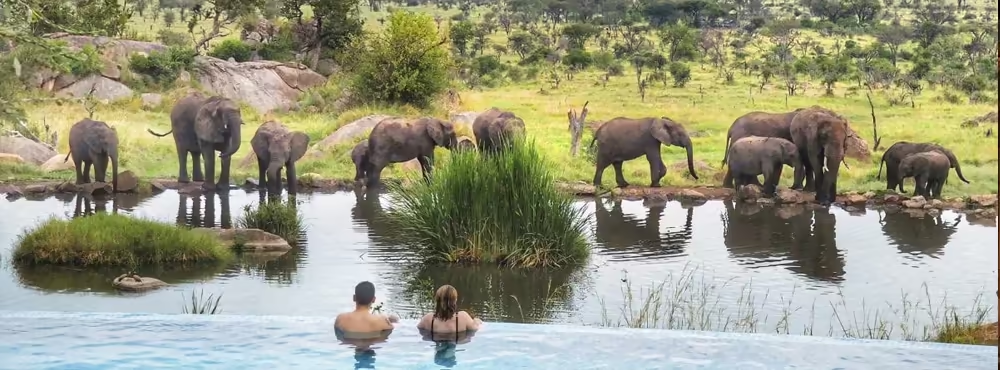
9 Days Serengeti Safari During Calving Season
Serengeti → Kilimanjaro → Lake Manyara → Ngorongoro
- Mid-range
- 4×4 Land Cruiser
From $2,670 pp
View details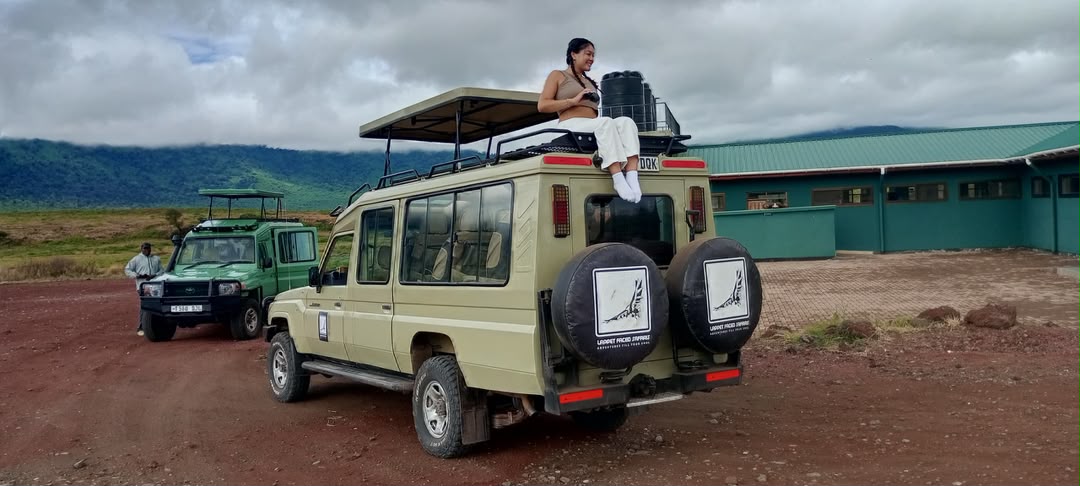
3-Day Serengeti NP, Ngorongoro Crater
Serengeti → Ngorongoro
- Mid-range
- 4×4 Land Cruiser
From $940 pp
View details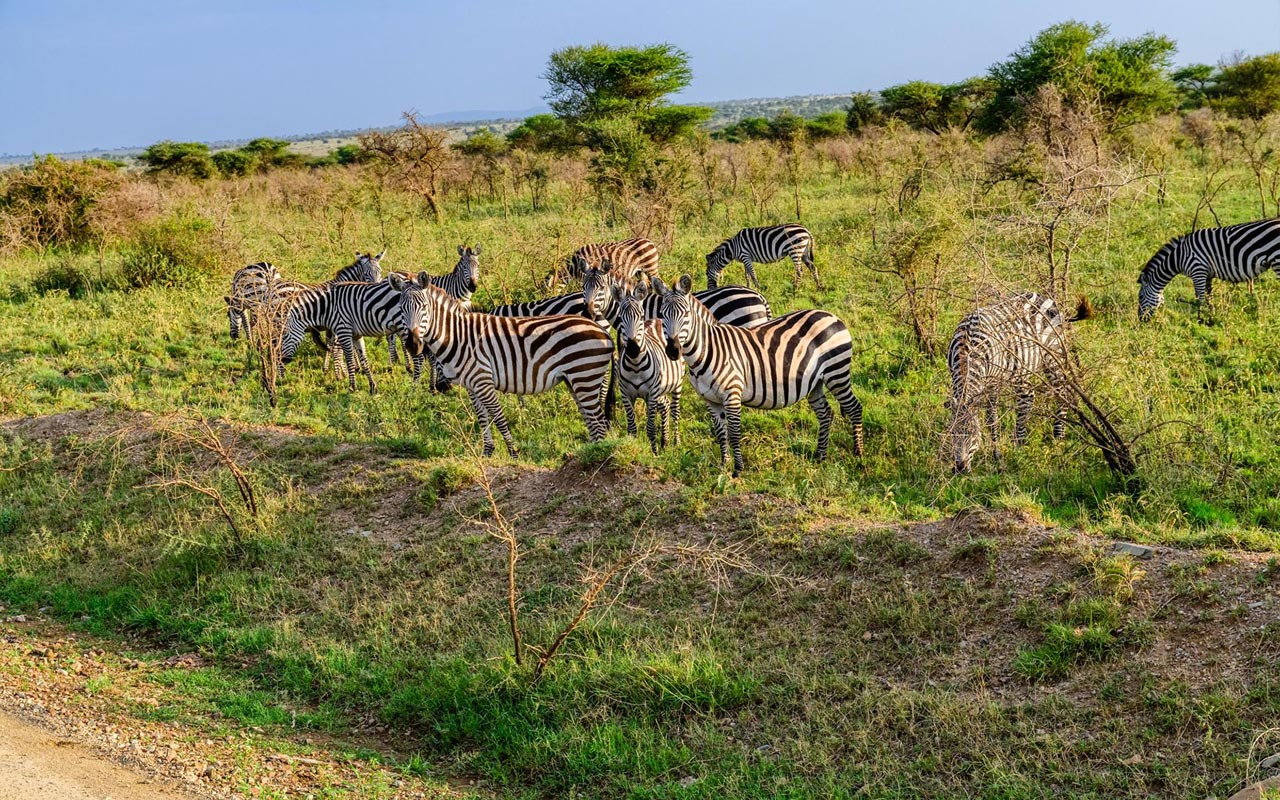
3 Days Safari from Zanzibar - Tarangire Np and Ngorongoro Crater
Zanzibar → Tarangire → Ngorongoro
- Mid-range
- 4×4 Land Cruiser
From $830 pp
View details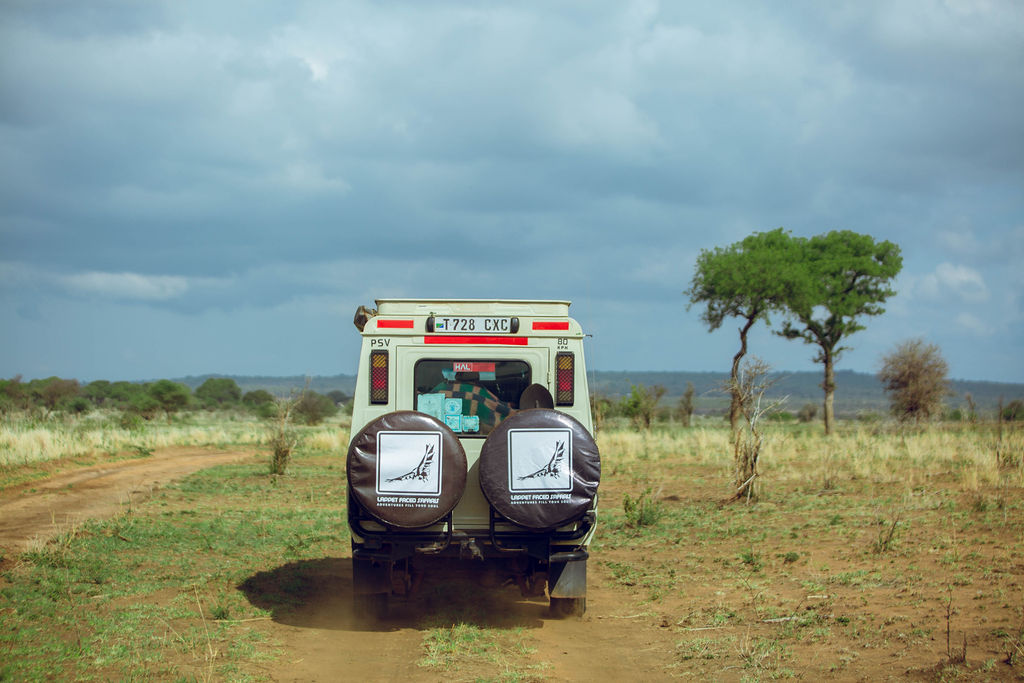
5-Day Tanzania Migration Safari: Ndutu, Serengeti, and Ngorongoro Crater Adventure
Ndutu → Serengeti → Ngorongoro
- Mid-range
- 4×4 Land Cruiser
From $1,690 pp
View details

Ying / Aug 2026
The guide was very experienced
It was a very enjoyable trip! We were always lucky, and our wishes always came true. We had great travel companions and a great guide, and a…
catchatter2016
Best custom Private Small Group Safari Experience by Lappet Faced Safaris
Francisco was amazing at organizing exactly the trip we wanted. He took the time to answer all our questions and custom made our trip with a great price. We chose the luxury tented lodges but the mid-priced accommodations looked good too. We saw so many animals up close, right by our Land Rovers, on our custom private 10 day safari (Tarangire, Serengeti and Ngorongoro). He also arranged a three night get away on Zanzibar at the Zuri Zanzibar resort. It was fabulous! All of the accommodations were fabulous and the food was delicious. You can trust Francisco to organize your safari and make it the trip of your lifetime! This trip exceeded our expectations and that is saying a lot for our group! Our guides, Ukadi & Alfred, were also amazing, they have a lot of experience as a safari guides and have vast knowledge on the animals, plants, trees and the culture. They spotted so many animals and birds for us, and were patient while we photographed everything. We even got to see all of the Big 5! We saw huge pools of hippos, leopards, cheetahs, lions, elephants, rhinos, Cape buffalos, zebras, wildebeest, ostriches, baboons, hyenas and much, much more! We really recommend going with Lappet Faced Safari tour company, they are the best! Thank you for sharing your beautiful world with us.
Kiki / Aug 2026
A truly unforgettable trip, the local tour guide was very responsible!
Overall, our trip to Kenya was fantastic. The itinerary was excellent, and they handled a few hotel issues very promptly and efficiently. Our…
Yixin D
Lappet Faced Safari Forever!
Francisco and his team have done a very good job. Francisco has arranged everything in Tanzania and kept an eye on our trip. Francisco's response speed is very fast. He arranged a photographer for our Safari The photographer recorded all the animals we saw and the wonderful moments. Our driver Noel is like my big brother. He has eagle eyes and finds animals at any time. He knows time management, and we have nothing to worry about with him. We saw rhinoceros and even baby rhinoceros six times in Ngorongoro, and on the third day we had seen all the Big Five and their babys.This is a Great Safari.Francisco and his team are very reliable. We paid the full amount when we were in China. Francisco completed all our hotel reservation requirements and sent us a hotel reservation form.Francisco is very honest. Their profits are not high, but they take their customers very seriously, even if their company is small.Their prices are detailed and transparent, and all details will be sent. Choosing them will make you have an unforgettable trip!弗朗西斯科和他的团队非常好,弗朗西斯科为我们安排好了一切,所有酒店没有任何更改,他安排了摄影师记录了我们的游猎时光,我们在第三天的时候已经看到了Big Five 和他们的babys.
xiang / Jul 2026
A very reliable travel agency
Driving an off-road vehicle bumpily on the vast grassland, the dust raised seems to be a filter of time, instantly pulling people back to the…
philo04
Wonderful Safari experience with Myk as our guide
We did a custom made safari tour for seven nights in Tanzania using the guide Myk Walcott from this company. It was an amazing experience. Myk is a fantastic guide, he is calm, supportive, knowledgeable, is a very safe driver, and is an excellent game driver, he tended to our every need. We stayed in four different hotels and all were excellent, the good was excellent, every detail was well organized. We had fantastic packed lunches on the go, we always had cold bottled water at our disposal. We felt very safe and like we were in good hands. We highly recommend this safari company and especially Myk as your guide. He went above and beyond for us, taking us to a local market in Arusha per our request and we even stopped at a local orphange to drop off supplies near the Tarangire National Park which was a wonderful experience. We only wish we could have stayed for longer and we hope to return in the future. Highly recommended
Let's plan together
Ready to Experience Tanzania?
Tell us your dates and dreams — our Arusha team will craft a private itinerary within 24 hours.
