
Western Tanzania
Mahale Mountains National Park
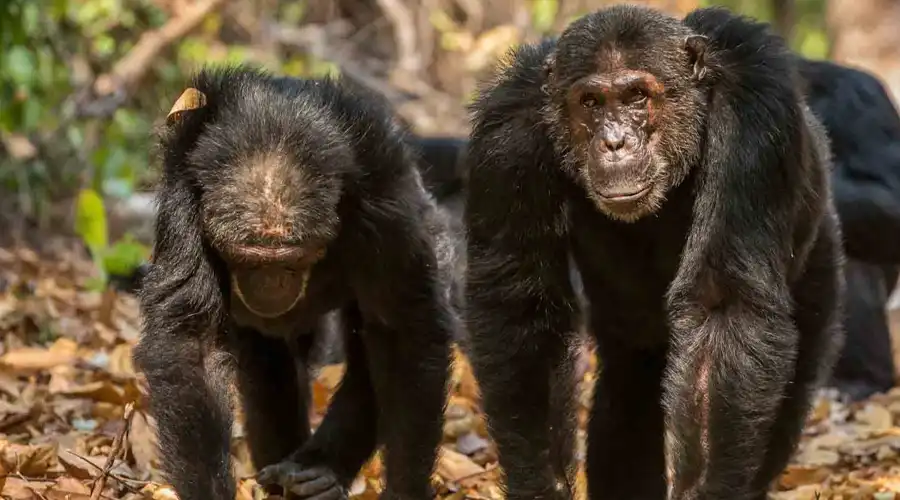
Chimpanzees on a white-sand shore
About Mahale Mountains National Park
Mahale may be the most beautiful park in Africa: forested mountains rising straight from the clear waters of Lake Tanganyika, with white-sand beaches at their feet. It protects one of the world's largest known populations of wild chimpanzees.
Days here follow the chimps — trekking forest trails with expert trackers for that unforgettable hour among the Mimikire clan — and end swimming or kayaking in the world's longest freshwater lake. Remote, roadless and reached by boat, Mahale is expedition travel at its most rewarding.
Wildlife
What You'll See
- Chimpanzee
- Red Colobus
- Forest birds
- Lake Tanganyika fish
Activities
What You Can Do
- Chimpanzee trekking
- Swimming & kayaking
- Dhow cruises
- Forest walks
Chimpanzees and clear water
Mahale: Forest, Mountain and Lake Tanganyika
Mahale is arguably the most beautiful national park in Tanzania and certainly the most improbable. Forested mountains rise straight out of Lake Tanganyika — the second-deepest and second-oldest lake in the world — and there is no road in. You arrive by light aircraft and then by boat along the shore, and the camps sit on white sand beaches with the forest behind them.
The park protects roughly a thousand chimpanzees, and the Mimikire group, known as the M group, has been studied by Japanese researchers since the 1960s. They are thoroughly habituated, and trekking to find them means walking uphill through dense forest until the trackers locate them, then spending a strictly limited hour in their company.
What makes Mahale unusual is the combination. You trek chimpanzees in the morning and swim in astonishingly clear freshwater in the afternoon — no bilharzia in the deep water off the camps, no crocodiles at the beaches, and hundreds of endemic cichlid fish visible while snorkelling.
What you do
Mahale Highlights
Chimpanzee trekking
The M group has been habituated for over half a century. Treks last one to four hours through steep forest, ending in an hour with the family.
Swimming in Lake Tanganyika
Clear, deep, warm freshwater directly off the beach, safe from crocodile and bilharzia at the camps, with hundreds of endemic cichlids to snorkel over.
Kayaking and dhow trips
Paddling the shoreline beneath the forested peaks at sunset is the image most people take home from Mahale.
Total isolation
No roads, no vehicles and no through traffic. A handful of camps on a lake shore backed by mountains — one of the most remote places you can comfortably stay in Africa.
Planning
Mahale FAQs
When is chimpanzee trekking best?
The dry season from May to October, and especially July to October. In the dry months the chimpanzees stay lower on the mountain where food is available, which means shorter, easier treks and higher success rates. In the wet season they move higher and the forest becomes slippery and steep, so treks are longer and harder. Most camps close from around March to May.
How difficult is the trek?
Moderate to hard, and harder than most people expect from a beach location. The forest is steep and humid, there are few paths, and the walk can last four hours before you find the group. Good grip on your shoes matters more than anything else. Once you reach them, you have one strictly timed hour, wearing a mask, at a minimum distance the chimps routinely ignore.
How do I get to Mahale?
Scheduled light aircraft from Arusha to the Mahale airstrip, then a boat transfer of one to two hours along the lake shore to your camp. It is a long, expensive journey and it is almost always combined with Katavi, which sits on the same air route. Allow at least three nights, because the flights only run on set days.
Let's plan together
Ready to Experience Tanzania?
Tell us your dates and dreams — our Arusha team will craft a private itinerary within 24 hours.
