
10 Days in northern Tanzania
Tarangire · Serengeti · Ngorongoro · Lake Manyara
Safari overview
10 Days in northern Tanzania
Embark on an unforgettable journey through Northern Tanzania’s most iconic destinations. This safari circuit captures the heart of Africa with expansive savannas, rich wildlife, and breathtaking landscapes. From Tarangire’s ancient baobabs and elephant herds to the dramatic Ngorongoro Crater, you’ll traverse some of Tanzania’s best parks, culminating in the endless plains of the Serengeti. Marvel at the world-famous Great Wildebeest Migration (seasonal) and experience authentic encounters with Maasai culture. This adventure combines immersive wildlife experiences with the comfort of top-tier lodges, ensuring a balanced blend of excitement and relaxation.
Day by day
10 Days, Planned to the Last Sunset
-
Your journey begins with a drive to Tarangire National Park, famous for its sprawling baobab trees and large elephant herds. The road runs southwest out of Arusha through Maasai grazing country, where cattle and goats share the roadside with the occasional giraffe, and the land opens out as the highlands fall away behind you. Enjoy a scenic picnic en route and an afternoon game drive upon arrival.
Tarangire is built around a single river of the same name, and in the dry months it is the only reliable water for a long way in any direction. That one fact shapes everything you see here: elephants come down to dig in the sand of the riverbed, zebra and wildebeest gather on the banks, and the predators that follow them are never far behind. The baobabs the park is known for stand over all of it, some of them centuries old, their trunks scarred where elephants have stripped the bark for moisture.
The afternoon is the best light of the day for photographs, and your first drive is an unhurried one — time to settle into the vehicle, work out where everyone wants to sit, and get your eye in.
- Full board
Where you sleep · Tarangire
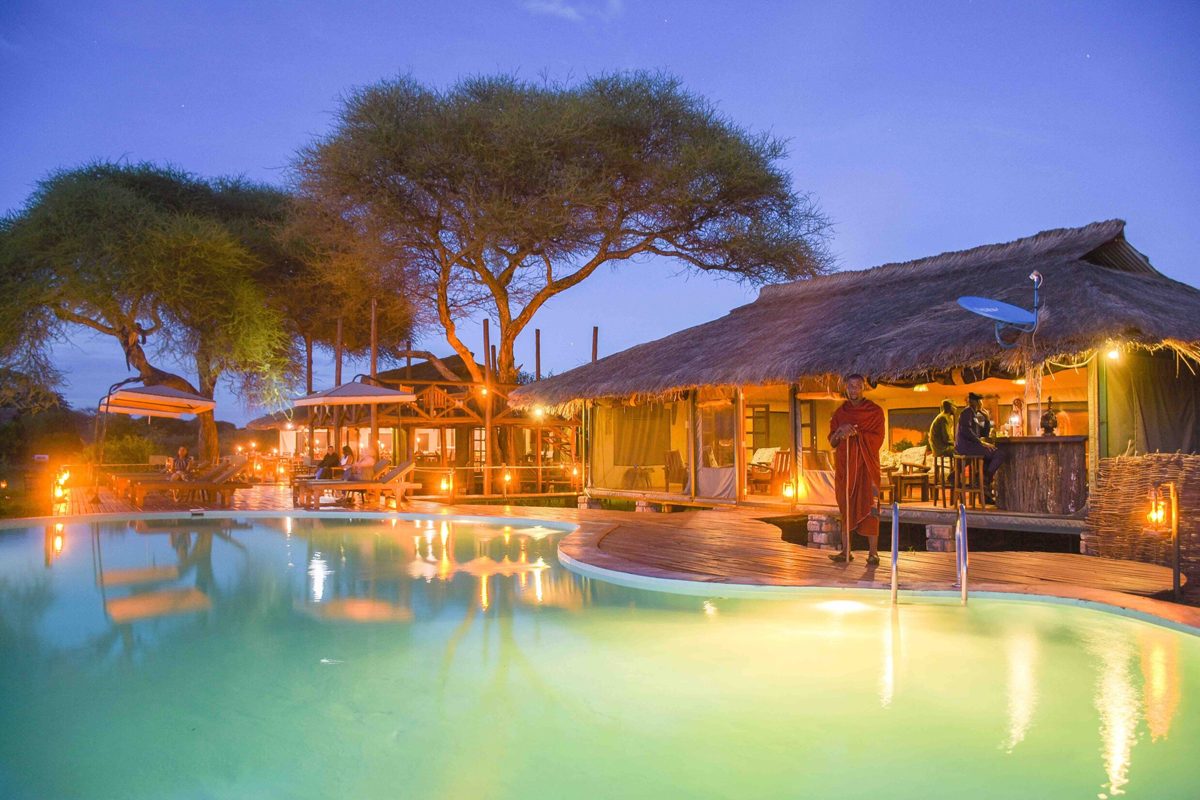
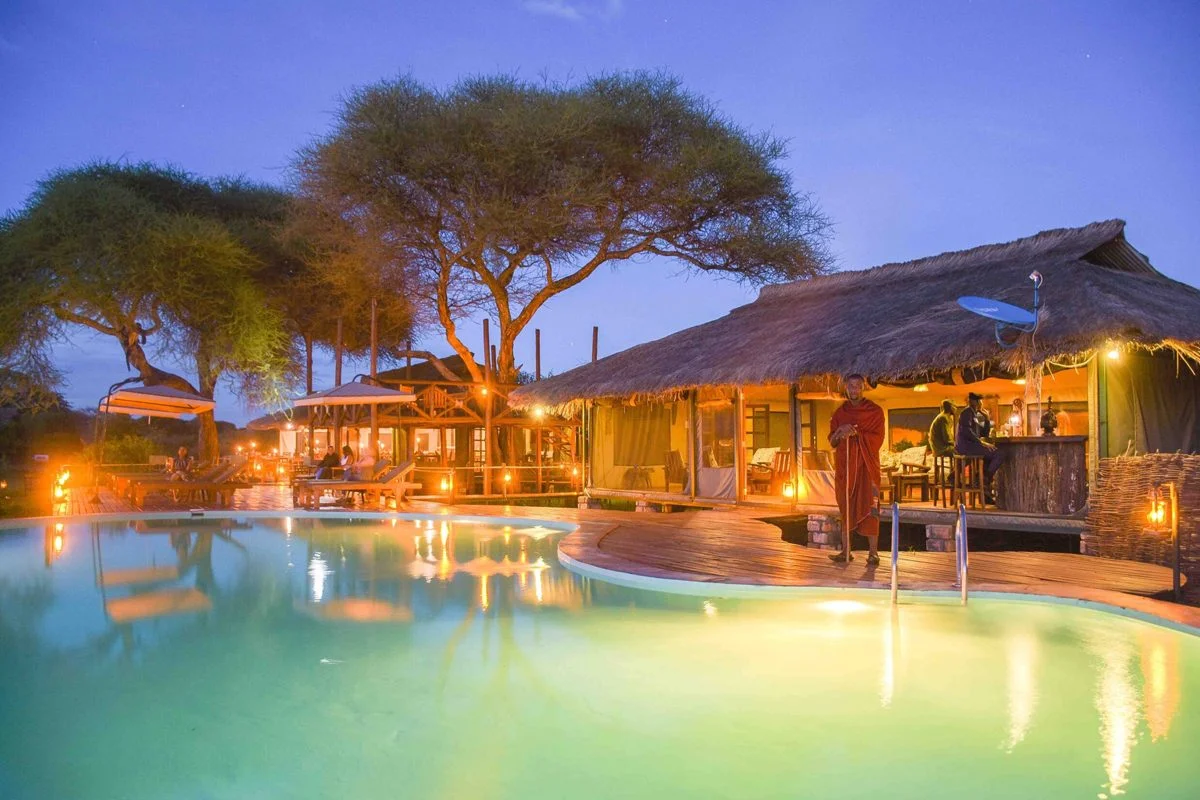 Experience the beauty of Tarangire Simba Lodge, offering luxurious accommodations with breathtaking views of Tarangire National Park.
 -
Explore Tarangire’s rugged beauty with a full day of safari. The park’s rivers and swamps attract numerous wildlife, including lions, leopards, and herds of buffalo. A full day means you can go further south than most visitors ever do, into the country around the Silale Swamp, where the grass stays green long after the plains have turned to dust.
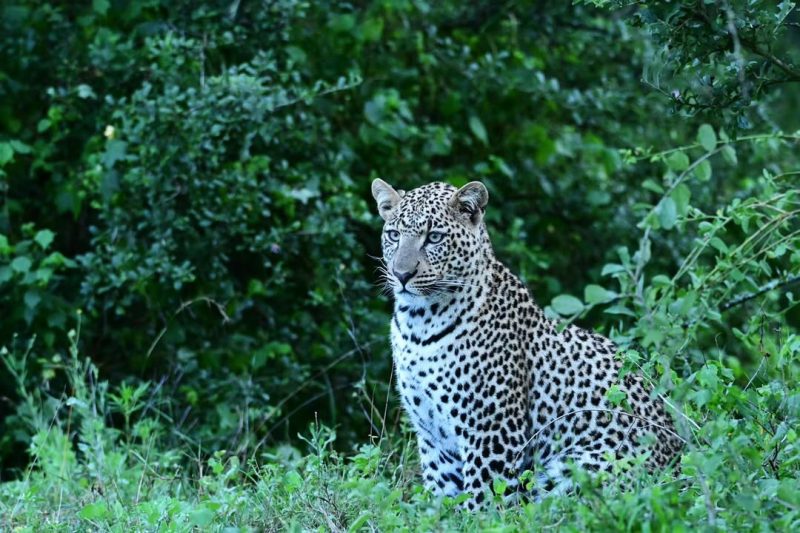
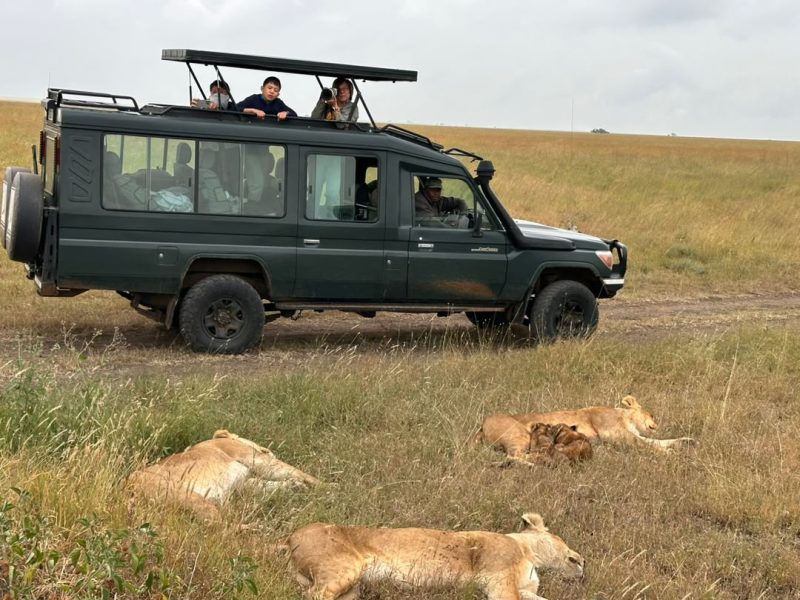
This is good ground for the cats. Lions here are often found on termite mounds or lying up in the shade of a baobab through the heat of the day, and leopards use the thick riverine growth along the watercourses. Buffalo move in the big, dusty herds that give the park its reputation, and where there are buffalo there is usually something watching them.
Tarangire is also one of the finest birding parks in northern Tanzania, and a day here without leaving is what makes that obvious — yellow-collared lovebirds, hornbills, and dry-country species you will not see again on this trip. Lunch is taken in the park so that no part of the day is spent driving back and forth.
- Full board
Where you sleep · Tarangire
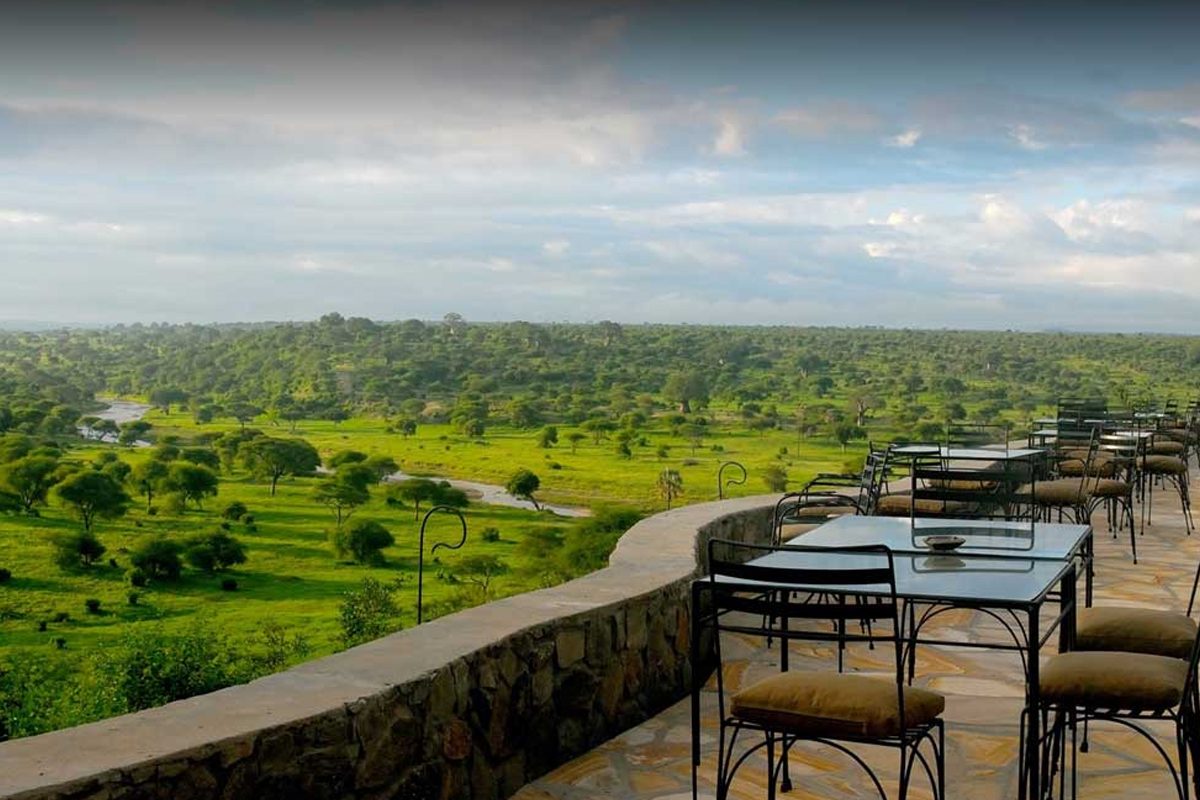
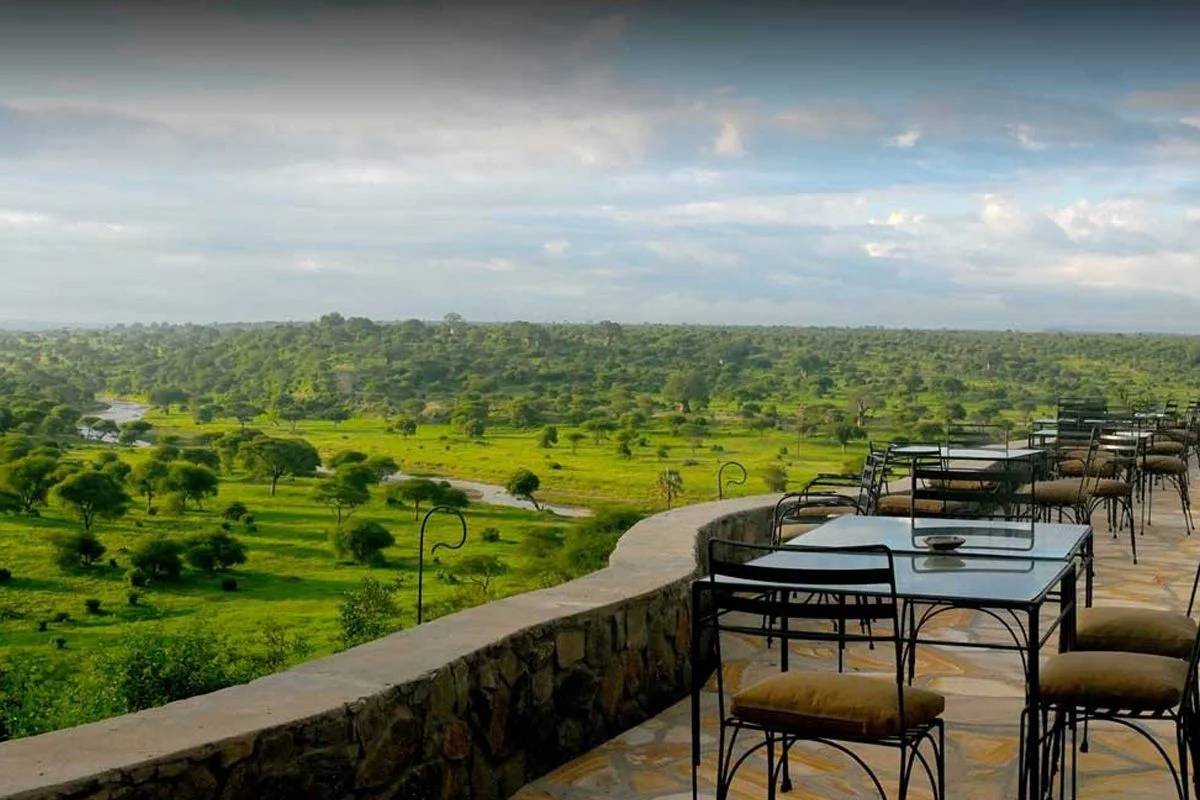 Discover Tarangire Safari Lodge, a luxurious lodge offering breathtaking views and an unforgettable safari experience. Located in the heart of Tarangire.
 -
Depart for Ngorongoro, passing through the bustling village of Mto-Wa-Mbu, where you can explore local markets and farms. Continue to your lodge near the Crater.
Mto wa Mbu — the name means "river of mosquitoes" — sits at the foot of the Rift Valley escarpment where water coming off the wall makes the land unusually fertile. It has drawn people from all over Tanzania, and the result is a village where a great many of the country’s ethnic groups live side by side in one small farming town. The market reflects that: rice and bananas grown in the irrigated plots behind the village, carvings, cloth, and produce from half a dozen different traditions in one place.
Beyond the village the road climbs the escarpment in a long series of bends, and the view back over Lake Manyara and the valley floor is one of the best on the northern circuit. At the top the country changes completely — cool, green, cultivated highland farmland around Karatu, several degrees colder than the plains you left that morning.
- Full board
Where you sleep · Ngorongoro & Karatu
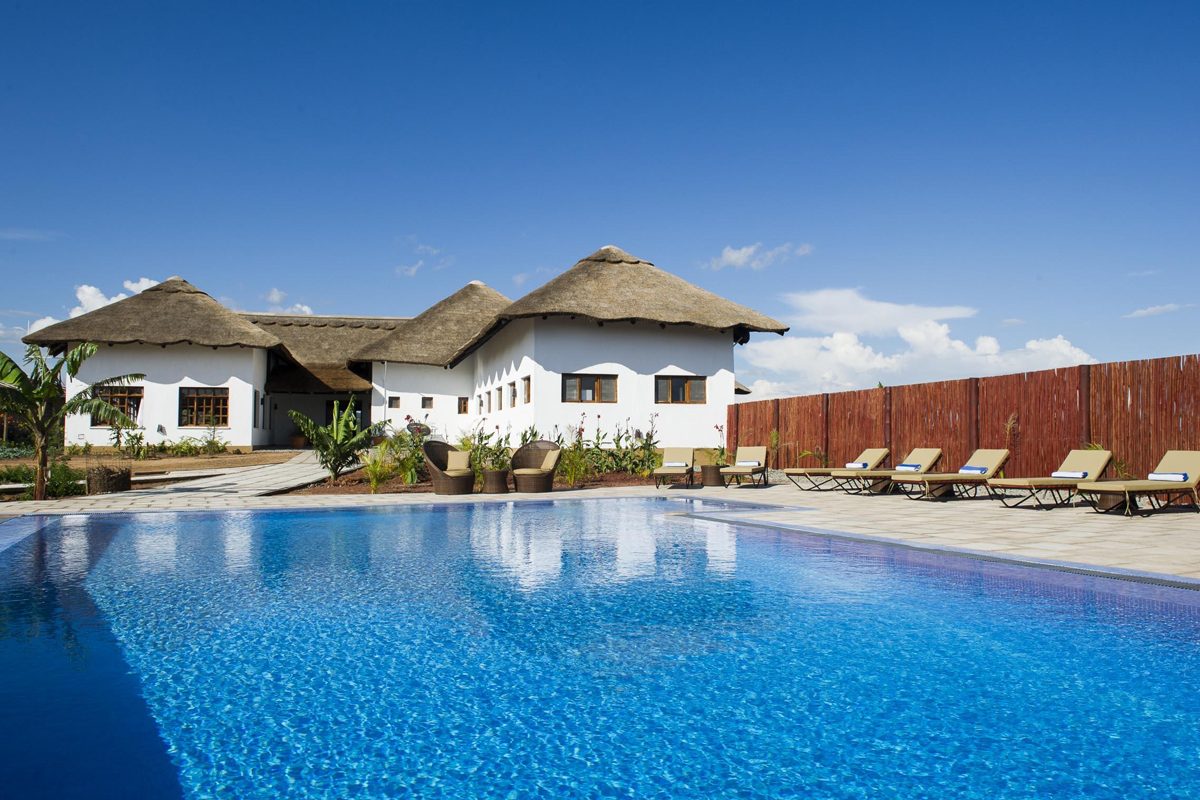
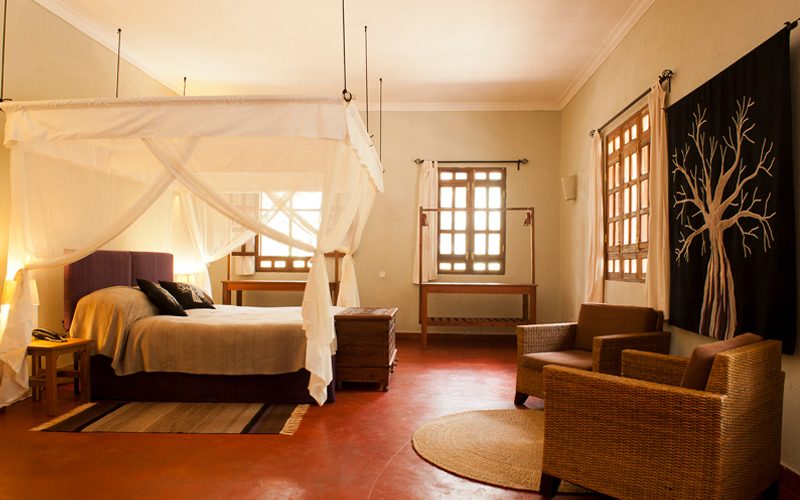
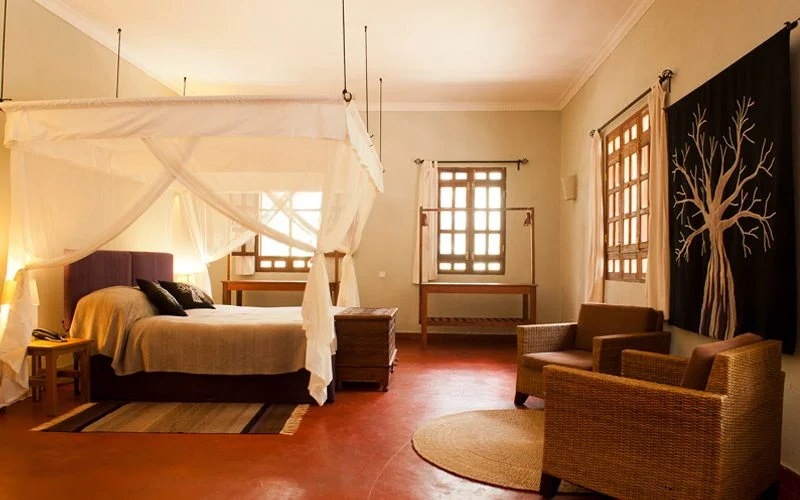 Experience the rustic charm of Ngorongoro Farm House, a peaceful retreat near the Ngorongoro Crater. Enjoy spacious rooms, farm-to-table dining.
 -
Descend into Ngorongoro Crater, home to a dense concentration of wildlife, including the rare black rhino. Enjoy a picnic breakfast on the crater floor as you take in the breathtaking landscapes.
The crater is the collapsed caldera of a volcano that was once, by most estimates, as tall as Kilimanjaro. What is left is a bowl roughly 260 square kilometres across with walls rising some 600 metres from the floor, and because those walls are steep enough to discourage most animals from leaving, the wildlife inside stays put year-round. That is why the density is what it is: no long searching, no waiting for a migration to arrive.
On the floor you move between distinct pieces of country in the space of an hour — open short-grass plain, the yellow-barked acacias of the Lerai Forest, the Munge stream, and the shallow soda water of Lake Magadi with flamingos working the edges. Black rhino are the animal everyone hopes for and they are genuinely present here, most often seen at distance in the early morning before the light gets hard. The whole crater sits inside the Ngorongoro Conservation Area, a UNESCO World Heritage Site and one of the few protected areas anywhere designed for people and wildlife together: Maasai families hold grazing rights on the floor, and you will pass cattle and herders on the way.
- Full board
Where you sleep · Ngorongoro & Karatu
Experience the rustic charm of Ngorongoro Farm House, a peaceful retreat near the Ngorongoro Crater. Enjoy spacious rooms, farm-to-table dining. -
Travel to the Serengeti, stopping at the Olduvai Gorge, known as the "Cradle of Mankind." Discover the region’s rich archeological history before continuing to the Serengeti plains.
Olduvai — more correctly Oldupai, after the wild sisal that grows along it — is a steep-sided ravine cut through layer upon layer of volcanic ash and lake sediment. Those layers are what make it extraordinary: each one can be dated, so anything found in them can be dated too. The excavations Louis and Mary Leakey carried out here from the 1930s onward produced some of the most important hominin fossils ever recovered, along with stone tools worked by hands that were not yet human. The small museum on the rim looks out over the gorge and sets out what was found and where.
From there the road runs on to the short-grass plains of the southern Serengeti, and the change is abrupt — grassland to the horizon with almost nothing standing on it. The Maasai called it siringet, the place where the land runs on forever, and for the last stretch before Naabi Hill you understand exactly why. Game viewing continues as you drive; on these plains you see things a long way off.
- Full board
Where you sleep · Serengeti
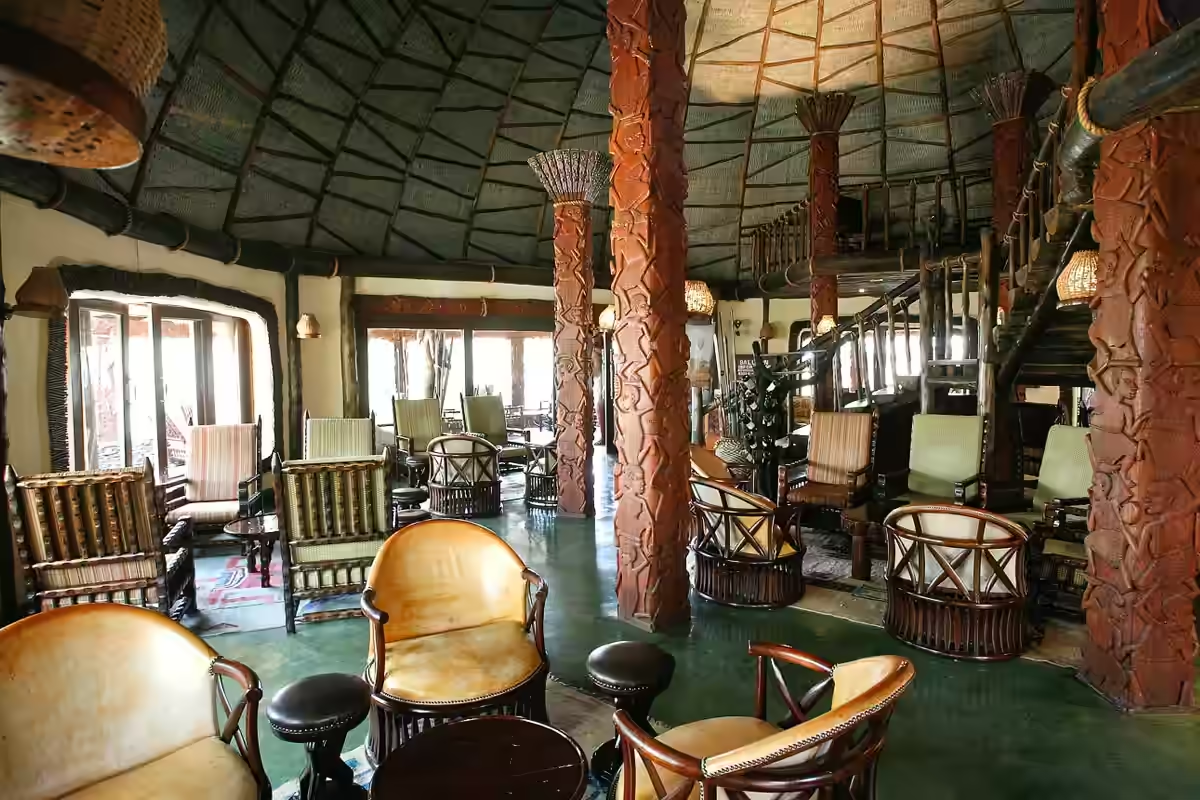
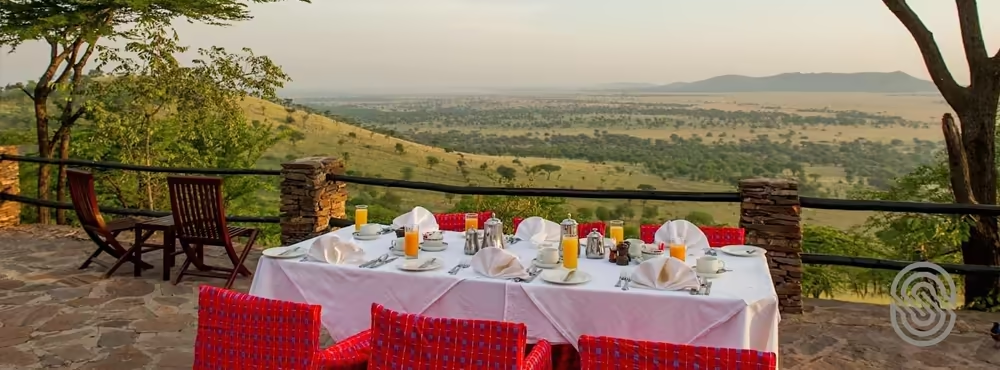 Discover the unforgettable experience of Serengeti Serena Safari Lodge! Nestled in Tanzania’s stunning Serengeti National Park, this luxurious lodge.
 -
Embark on a full day of safari in the central Serengeti, where you’ll seek out the Big Five and observe the intricate interactions of the region’s wildlife. The central area, around the Seronera valley, holds water when much of the park is dry, and that keeps game here in every month of the year.
Seronera is one of the most reliable places in Africa to see big cats. Lion prides here are large and well known, resident rather than passing through. Leopards use the fig and sausage trees along the watercourses and are often found draped along a branch in the middle of the day. Cheetah hunt the open ground on either side of the river, where they can see and be seen.
A full day lets you work with the light rather than against it — out early while it is cool and animals are still moving, a slow middle of the day when the plains go quiet, and back out for the long golden hour before dusk. Your guide reads the day as it goes: circling vultures, alarm calls from impala, fresh tracks across the road after rain.
- Full board
Where you sleep · Serengeti
Discover the unforgettable experience of Serengeti Serena Safari Lodge! Nestled in Tanzania’s stunning Serengeti National Park, this luxurious lodge. -
Enjoy morning game drives in the Serengeti’s central region before transferring to a lodge near the Mara River, where wildlife sightings are plentiful, especially during migration. The drive north is a game drive in its own right rather than a transfer to be endured — the country changes as you go, from open plain into rolling hills, granite outcrops and long grass.
The northern Serengeti sees a fraction of the vehicles that the centre does. It is quieter, greener for more of the year, and the herds that come through here in the second half of the year are the reason people travel a long way to reach it. Even outside those months the north holds resident elephant, giraffe, buffalo and its own lion prides.
The Mara River itself runs through riverine forest along the park’s northern edge, with resident hippo pods and large crocodiles that have been waiting in the same pools for a very long time. Arriving in the afternoon gives you time to get out to the river before dark.
- Full board
Where you sleep · Serengeti
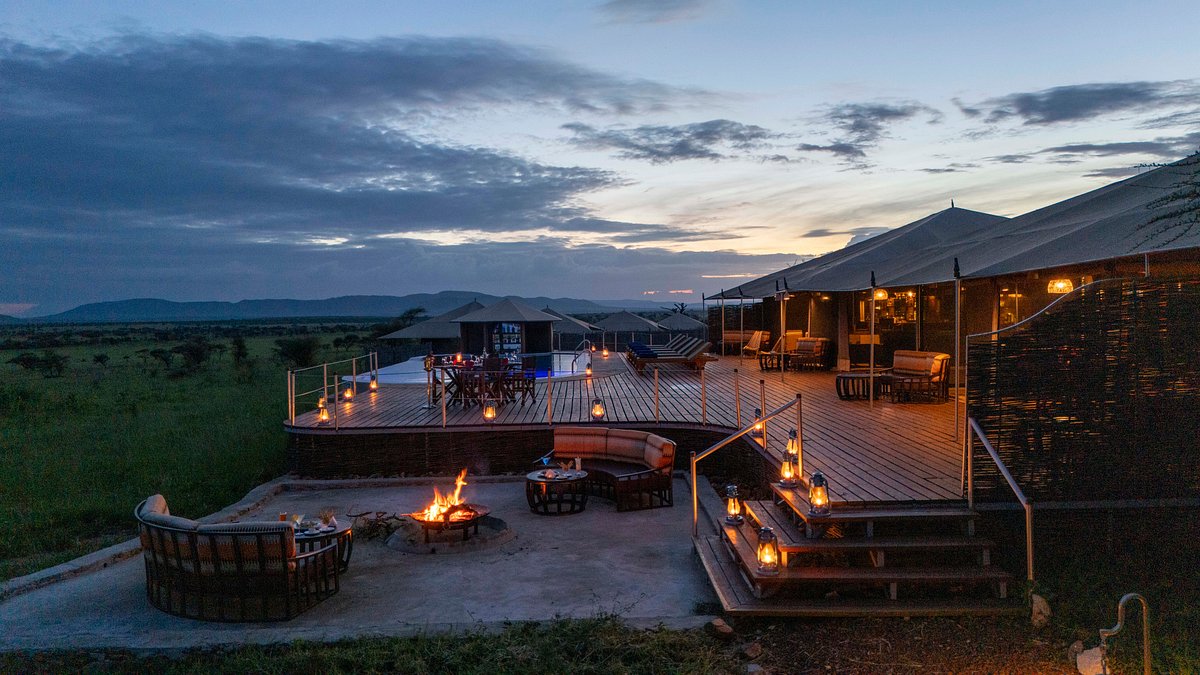 Stay at Moyo Migration Tented Camp in the Serengeti: comfortable safari tents, wildlife experiences and Great Migration safaris.
 -
Spend the day exploring new areas of the Serengeti, particularly near the Mara River. During the migration season, this area provides a front-row seat to dramatic river crossings.
The crossings are the part everyone has seen on film, and they are worth understanding before you go looking for one. Wildebeest gather on the bank in their thousands and then do nothing at all, sometimes for hours, sometimes for a whole day, until something tips them and the whole mass goes down the bank at once. Nobody can promise you a crossing on a given morning — the herds move to their own reasons — but the northern river is where they happen, and they are most likely between roughly July and October, when the migration is in this part of the park.
A crossing is not the only reason to be here. The predators that shadow the herds are at their most active, the riverine forest holds birds and primates you will not have seen further south, and the hills above the river give long views over country almost entirely free of other vehicles. Days here are spent out, with lunch carried, following whatever the river is doing.
- Full board
Where you sleep · Serengeti
Stay at Moyo Migration Tented Camp in the Serengeti: comfortable safari tents, wildlife experiences and Great Migration safaris. -
Spend the day exploring new areas of the Serengeti, particularly near the Mara River. During the migration season, this area provides a front-row seat to dramatic river crossings.
The crossings are the part everyone has seen on film, and they are worth understanding before you go looking for one. Wildebeest gather on the bank in their thousands and then do nothing at all, sometimes for hours, sometimes for a whole day, until something tips them and the whole mass goes down the bank at once. Nobody can promise you a crossing on a given morning — the herds move to their own reasons — but the northern river is where they happen, and they are most likely between roughly July and October, when the migration is in this part of the park.
A crossing is not the only reason to be here. The predators that shadow the herds are at their most active, the riverine forest holds birds and primates you will not have seen further south, and the hills above the river give long views over country almost entirely free of other vehicles. Days here are spent out, with lunch carried, following whatever the river is doing.
- Full board
Where you sleep · Serengeti
Stay at Moyo Migration Tented Camp in the Serengeti: comfortable safari tents, wildlife experiences and Great Migration safaris. -
Spend the day exploring new areas of the Serengeti, particularly near the Mara River. During the migration season, this area provides a front-row seat to dramatic river crossings.
The crossings are the part everyone has seen on film, and they are worth understanding before you go looking for one. Wildebeest gather on the bank in their thousands and then do nothing at all, sometimes for hours, sometimes for a whole day, until something tips them and the whole mass goes down the bank at once. Nobody can promise you a crossing on a given morning — the herds move to their own reasons — but the northern river is where they happen, and they are most likely between roughly July and October, when the migration is in this part of the park.
Late in the afternoon, you will fly back to Arusha- Breakfast
Transparent pricing
What This Safari Costs
Prices are per person sharing for a private 10-day / 9-night safari, and depend on the lodges you choose. Park fees, guide, 4×4 and meals are included in every tier.
| Season | Solo | 2 guests | 4 guests | 6+ guests |
|---|---|---|---|---|
| Low season 1 March – 31 May The long rains. Lowest prices and the greenest landscape. | $7,970 | $5,310 | $4,680 | $4,400 |
| High season 1 November – 20 December, 6 January – 29 February Dry and green in turn, with good game viewing and easier lodge availability. | $8,380 | $5,580 | $4,930 | $4,630 |
| Peak season 1 June – 31 October, 21 December – 5 January Migration river crossings and the driest months. Book well ahead. | $9,310 | $6,200 | $5,480 | $5,150 |
All prices are per person sharing, in USD.
Final quotes depend on season, group size and lodge availability — tell us your dates and we'll confirm exact pricing free of charge.
The fine print, upfront
What's Included
Included
- All Park fees
- All activities (unless labeled as optional)
- All accommodations as stated in the itinerary
- A professional driver/guide
- All transportation (unless labeled as optional)
- All Meals (as specified in the day-by-day section)
Not included
- International flights (from/to home)
- Additional accommodation
- Tips (tipping guideline US$20.00 pp per day)
- Personal items (souvenirs, travel insurance, visa fees, etc.)
- Services not mentioned in the program
- Travel insurance and medical repatriation
- Items of a personal nature


catchatter2016
Best custom Private Small Group Safari Experience by Lappet Faced Safaris
Francisco was amazing at organizing exactly the trip we wanted. He took the time to answer all our questions and custom made our trip with a great price. We chose the luxury tented lodges but the mid-priced accommodations looked good too. We saw so many animals up close, right by our Land Rovers, on our custom private 10 day safari (Tarangire, Serengeti and Ngorongoro). He also arranged a three night get away on Zanzibar at the Zuri Zanzibar resort. It was fabulous! All of the accommodations were fabulous and the food was delicious. You can trust Francisco to organize your safari and make it the trip of your lifetime! This trip exceeded our expectations and that is saying a lot for our group! Our guides, Ukadi & Alfred, were also amazing, they have a lot of experience as a safari guides and have vast knowledge on the animals, plants, trees and the culture. They spotted so many animals and birds for us, and were patient while we photographed everything. We even got to see all of the Big 5! We saw huge pools of hippos, leopards, cheetahs, lions, elephants, rhinos, Cape buffalos, zebras, wildebeest, ostriches, baboons, hyenas and much, much more! We really recommend going with Lappet Faced Safari tour company, they are the best! Thank you for sharing your beautiful world with us.
Kiki / Aug 2026
A truly unforgettable trip, the local tour guide was very responsible!
Overall, our trip to Kenya was fantastic. The itinerary was excellent, and they handled a few hotel issues very promptly and efficiently. Our…
Yixin D
Lappet Faced Safari Forever!
Francisco and his team have done a very good job. Francisco has arranged everything in Tanzania and kept an eye on our trip. Francisco's response speed is very fast. He arranged a photographer for our Safari The photographer recorded all the animals we saw and the wonderful moments. Our driver Noel is like my big brother. He has eagle eyes and finds animals at any time. He knows time management, and we have nothing to worry about with him. We saw rhinoceros and even baby rhinoceros six times in Ngorongoro, and on the third day we had seen all the Big Five and their babys.This is a Great Safari.Francisco and his team are very reliable. We paid the full amount when we were in China. Francisco completed all our hotel reservation requirements and sent us a hotel reservation form.Francisco is very honest. Their profits are not high, but they take their customers very seriously, even if their company is small.Their prices are detailed and transparent, and all details will be sent. Choosing them will make you have an unforgettable trip!弗朗西斯科和他的团队非常好,弗朗西斯科为我们安排好了一切,所有酒店没有任何更改,他安排了摄影师记录了我们的游猎时光,我们在第三天的时候已经看到了Big Five 和他们的babys.
xiang / Jul 2026
A very reliable travel agency
Driving an off-road vehicle bumpily on the vast grassland, the dust raised seems to be a filter of time, instantly pulling people back to the…
philo04
Wonderful Safari experience with Myk as our guide
We did a custom made safari tour for seven nights in Tanzania using the guide Myk Walcott from this company. It was an amazing experience. Myk is a fantastic guide, he is calm, supportive, knowledgeable, is a very safe driver, and is an excellent game driver, he tended to our every need. We stayed in four different hotels and all were excellent, the good was excellent, every detail was well organized. We had fantastic packed lunches on the go, we always had cold bottled water at our disposal. We felt very safe and like we were in good hands. We highly recommend this safari company and especially Myk as your guide. He went above and beyond for us, taking us to a local market in Arusha per our request and we even stopped at a local orphange to drop off supplies near the Tarangire National Park which was a wonderful experience. We only wish we could have stayed for longer and we hope to return in the future. Highly recommended
Robin / Jun 2026
A breathtaking, memorable voyage of dreams
This long-awaited trip required last-minute schedule changes mid-way due to illness and unavoidable flight disruptions, yet the Lappet Faced…
Let's plan together
Ready to Experience Tanzania?
Tell us your dates and dreams — our Arusha team will craft a private itinerary within 24 hours.
